

In a comment to my previous post, Eric’s brother correctly points out the lack of syncronicity between words and deeds in the US’ international policies, using this powerful Malcolm X quote:
“America preaches freedom and practices slavery. America preaches integration and practices segregation… A devil is still a devil whether he wears a bed sheet or a Brooks Brothers suit… I’d rather walk among rattlesnakes, whose constant rattle warns me where they are, than among those Northern snakes who grin and make you forget you’re still in a snake pit… Then the whole world would give Uncle Sam credit for being something other than a hypocrite.”
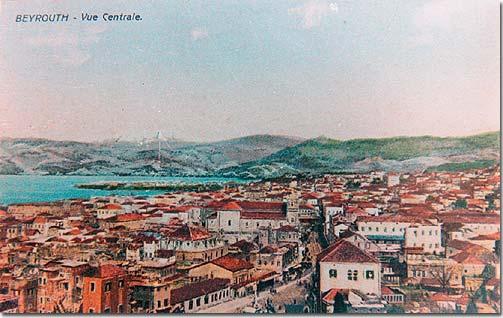
But, I do not think that the US is unique in this. As a matter of fact, practically every nation’s international policies and actions are, in reality, manifestations of its local and regional power struggles. Countries fight globally their local battles . . . That is the tragedy of Lebanon.
One thing my father always asks is “what is really going on here?” In other words, what is the problem behind the problem. My brother would generally think that there is some hidden government conspiracy, whereas my father would probably reduce the problem to organized crime (ie, the OJ Simpson murder case, the JFK assassination, and even Zidane’s red card). Comparatively, I would ask the question, “who are they really fighting?”
For example, it is very easy to make assumptions regarding the objectives behind the US’ international policy decisions, especially relating to the Middle — oil, the US’ affinity for Israel and its people, the domestic political agenda of “fighting terrorism” for electoral reasons. The US tends to wear its policies on it sleeves. In other words, you know exactly where they are coming from. But, what about the European nations’ political agendas? Weren’t the cries of “No to War” just as synical as the US’ policy of democratizing the Middle East? Nations like France and Russia had just as many econonmic and political interests in seeing the US war in Iraq fail as the US had in seeing it succeed. So, why did other European nations support the war? My guess is that it had nothing to do with WMDs or an afinity for the US. Rather, these smaller European countries (Spain, Italy, Portugal) were fighting their own internal European power struggle to counter France and Germany’s hegemony in EU policy decisions (especially regarding EU expansion and diminishing structural funds). I believe their support for the US came down simply to that single factor.
So, if in reality the cross border actions/policies of one nation essentially reflect an internal power struggle, who is using Lebanon as a battlefield? And Why? For example, what is Iran’s interest? Why has Iran-funded Hezbolla kidnapped Israeli soldiers just when Iran faced international pressure to stop its nuclear plans? Why have the Sunni-majority nations been so quiet (Saudia Arabia, Egypt, Jordan)? May this be, together with Iraq, the genesis of civil war in the Muslim world between Sunnis and Shiites? What is Syria’s role? Since Hariri’s assassination, the Syrians are being pushed out of Lebanon. Do the Syrians want to prove that they are still power brokers? Do they want to prove that Lebanon still needs their “protection”? How much of this is actually the vestige of Hariri’s corruption and of Lebanon’s sectarian politics? Or are these simply factors that have permitted all of these other players to use Lebanon as an easy battleground? Why does the Middle East pretend that it cares about the Palestinians? Aren’t the Palestinians the most poorly treated people in all of the Middle East and especially in Lebanon where they are treated as untouchables, locked up in refugee camps? Are the Palestinians nothing more than pawns to be used by the demogogues of the region to keep up their own political agendas, as happened in the Lebanese Civil War? Finally, why has Israel allowed itself to be so easily provoked? Isn’t Israel falling into a trap like the most naive of little children? Aren’t the Israelis the ones that the world (with the sole exception of the US) see as the most barbarious party in the struggle?
I really do not think that what is happening in Lebanon can be brushed off with the easy, stereotypical headlines that we always see regarding Israel and the Palestinians, the US and Iraq, etc. To simply reduce this to Israel and the Muslim nations around it is offensive to our intelligence, even if that is what the newspapers do to sell their papers. There are many wars that are being fought in Lebanon, and none of them have to do with the Lebanese people. But what is true is that Israel has fallen into the trap and the US has given them the red carpet to do so, just as everyone expected. In the meantime, Lebanon will watch its country be destroyed once more, and then wait to start all over again. This time without Hariri. Is that hopeful? I think even Sisyphus was hopeful. That’s the comedy.


I strongly agree w/ your comments. i think for most nations the interests are first- economic and then power- in the sense that individuals in power want to stay in power. i think i made a similar post earlier that i don’t think this is a “conspiracy,” but it is as you say “offensive to our intelligence.” The U.S. acts out of economic interest b/c the people in power are put in power by corporations. The whole domino theory after WWII was just propaganda so that we could get U.S. corporate interests in place. The first Gulf War was a “set up,” the U.S. wanted to get military presence in the middle east, primarily in Saudi Arabia (to protect our corporate interests), so we helped pick a fight between Iraq and Kuwait. We armed Iraq, pumped them up and then took Kuwait’s side, classic U.S. set up.
The current war on Iraq involved the same players. I guess i should back up- we did not like Iran- for many years prior to the first gulf war, so we put Sadaam Hussein in power, armed him w/ WMDs. Rumsfeld met with him, the same contractors that are now in Iraq set up weapons factories. See, http://www.workingforchange.com/comic.cfm?itemid=14912
Cheney was the Sect. of Defense and put all of this into play. Now the same exact players changed their minds (or did they?). So i agree that most current leaders are awful and act out of self-interest, which is usually motivated by greed (economic interests) and power.
As an side, I do not think this conflict has anything to do w/ religion or culture differences… that propaganda is just an “opiate for the masses.”
However, the U.S. takes the cake for being the most greedy, least democratic, and most oppressive.
I think there are two possible solutions… change campaign finance laws immediately. Washington is governed by Corporate lobbyist and thus, the rest of us are ruled by Corporate interests/greed. The second option is simply to take to the streets, but as long as people are busy keepin up with Jones’ (ie the mass consumtion of private property- better known as the disease called “Affluenza”) nothing will change. The poor will get poor, the richest of the rich will get richer; the rich will continue to wage wars for corporate interests in the name of liberty, religion, and freedom, meanwhile the poor (whether soldiers or civilians) will die, not for their countries, but for greedy corporations.
Or maybe China will soon challenge the U.S. hegemonic power.
Bro, I do not disagree with what you are saying. But, I think that to the same extent we must understand that there are a few different wars being fought at the same time and none of them are really being fought against the people everyone thinks they are fighting against. The US is NOT fighting terrorism. Israel is NOT fighting terrorism. But, at the same time Iran, Syria, and Hezbolla are NOT fighting Israel and are NOT fighting to protect the Palestinians. They are fighting internal power struggles that have nothing to do with the US, Israel or the Palestinians. Everyone is fighting different battles, and ironically the country that is losing doesn’t even have an army in the battle. It’s called geopolitics.
I wonder what would have happened if we had armed sadaam before the gulf war with BLTS rather than WMDS. hallelujah! 4ou tasty bacon!
no, seriously. here you will find the answer.
http://www.scientology.org/
Scientology is the answer! LOL.
I agree w/ Eric, i just think that the U.S. is the most awful, but only b/c they weild the most power.
Eric,
Check out the movie Syriana… fiction, but pretty accurate nevertheless.
Granuja,
Imagine if they had found PB&Js. That would be a sticky situation. Especially the crunchy PB.
i just saw a really good ken burns documentary on Jack Johnson (the first coming of Muhammed Ali)… you must check it out. I think you would really enjoy it- http://www.pbs.org/unforgivableblackness/
had you heard of him before?
This link made my blood boil:
http://zombietime.com/reuters_photo_fraud/